Tuesday, March 22, 2016

In Defense of Code Name: S.T.E.A.M.

While I've been playing video games as a hobby for nearly 30 years, rarely does a game come along that I feel the need to champion in the face of underappreciation, unawareness, and (admittedly sometimes deserved) criticism.  However, I can't stop thinking about Code Name: S.T.E.A.M. (which I'm going to abbreviate to CNS from here on, damn those periods) and how much I like it, so here I am to take up its banner.

Image result for code name s.t.e.a.m

CNS is a Nintendo 3DS strategy game developed by Intelligent Systems, most known for the venerable Fire Emblem and Advance Wars strategy series of games, not to mention the Paper Mario RPGs (whose entries have been hit-or-miss).  The eponymous task force is an elite team of steampunk-outfitted agents who comprise a greatest-hits list of 19th century American literature.  They've been brought together by Abraham Lincoln, who secretly survived the attempt on his life and went on to found S.T.E.A.M. (Strike Team Eliminating the Alien Menace) to wipe invading alien scum from the face of the earth.  Cast highlights include Henry Fleming from the Red Badge of Courage, John Henry, Tom Sawyer, Queequeg from Moby Dick, and all four main characters from The Wizard of Oz.  It's quite an eclectic bunch and it's great to see characters you'd never expect to see in a video game thrown together in this crazy situation.  No DudeBro McBiceps here.

Image result for code name s.t.e.a.m
Henry engages an alien.
Gameplay-wise, CNS plays out like a cross between the recent X-COM reboot and Valkryia Chronicles.  You'll pick up to four characters to take on each mission, each of which has a unique main weapon, swappable subweapon, and swappable steam tanks depending on their size.  Missions take place on a 3D map grid in which you directly control characters from a behind-the-back view.  Each character has a steam gauge that represents their action points for that turn, which they use to both move and fire weapons.  Movement is grid-based, and gives you the awesome benefit of refilling your steam gauge if you backtrack, which gives you an opportunity to scout an area and plan out strategy before committing to an action (steam used for movement is eaten up permanently once you attack or get attacked).  Weapons take between 1-4 steam to use and come in a variety of forms, from John Henry's grenade launcher to Queequeq's walking penguin bombs to a deadly sniper rifle wielded by The Fox (apparently a copyright-friendly nod to Zorro).  Aiming is done manually so it does require a bit of skill and patience to line up good shots with certain weapons; it's not done for you like in, say, Fire Emblem).  Any steam you don't use in a turn carries over to the next along with a certain refill rate depending on your steam boiler.  Leave sufficient steam in your tank at turn's end and you'll be able to do overwatch attacks during the enemy's turn if they come into your sight (they can also do this to you).  Each character also has a unique supermove they can use once per map and a unique passive skill.  So generally on your turn you freely switch between characters, scouting and attacking when possible while trying to avoid overwatch attacks.  When all characters have used up their steam or you're satisifed with how you've set them up, you end your turn and the aliens get a chance to move and attack.  There are a couple dozen species of aliens to exterminate, each with different abilities and glowing weak points that you should target if at all possible.  Missions have different objectives, such as reaching a certain goal space, defeating all enemies, or taking down a boss.

That's basically it.  But before I get to more specifics about why I enjoy CNS so much, let me address the elephant in the room, the main reason why the game received a healthy amount of criticism: the alien turn speed.  In the original version of the game, it's my understanding (as I never played it) that the alien turns could be excruciatingly long, up to a minute or more of you watching them move around and attack while you do nothing.  This was especially pronounced on the original 3DS model; I have the "New" 3DS which has a faster processor (and also a "nub" for moving the camera which helps with aiming).  I understand this is a legitimate critique and had I played the game this way I most likely would've been frustrated as well.  However, Nintendo released a patch for CNS that adds a fast-forward button that dramatically speeds up enemy turns.  With it on (and I never have it off), alien turns never take any longer than the "Enemy Activity" phase in X-COM - I'd say 20 seconds at most.  It's completely tolerable, and also required viewing to help you figure out where enemies are lurking.

Now, you can make the argument that the patch should not have been necessary, and that everyone - old or new 3DS - should be able to have the ideal playing experience.  That's not without merit.  But needing patches or certain hardware to have the best experience is hardly unique to video gaming - PC gamers have been dealing with this for decades.  It's just not something we're used to from Nintendo, where we expect plug-and-play as the standard.  And while the difference in processing power between 3DS models is a bummer, perhaps we should be praising Nintendo for issuing a post-release patch that addresses a common complaint about a game - something the stalwart company hardly ever does.  In short, I did have the ideal Code Name: S.T.E.A.M. playing experience, and while I understand the shortcomings of prior versions, I'm going to judge the game accordingly - this seems only fair to me.

Enemy turns taking too long wasn't the only critique lobbed at CNS, however.  Let's address a few others:
The full cast, including four Fire Emblem guest characters.

"The story isn't great / the characters are underutilized." - (spoilers ahead) I'll be the first to admit the overarching plot in CNS is nothing spectacular; this isn't a game that'll leave you gaping at unexpected twists and turns.  However, the setting in this original IP (not another derivative sequel) is fantastic, crammed with all the pulpy steampunk goodness you could want.  Over the course of the game, you'll rescue Queen Victoria from Buckingham Palace, pay a visit to alien-infested Miskatonic University, race the aliens to recover the Necronomicon from a vault underneath the White House, liberate occupied Oz, and engage in kaiju-style battles as Lincoln piloting a giant steampunk mech.  What more could I want from the story in a strategy game?  It's honestly more memorable than any of the generic fantasy-intrigue plots of Fire Emblem games.  It's presented well, through motion comics in a cel-shaded art style.  Some of the level designs can be a little bland (the White House vault especially just looks like Generic Warehouse #3), but others are great, such as when you work your way up the slope of a canyon or through the winding streets of the Emerald City.  And while the characters don't exactly have amazing story arcs where they learn deep truths about themselves, I'm really OK with that.  This is a game about literary heroes and Abe Fricking Lincoln teaming up to kick some alien ass.  I don't really care to listen to John Henry brood about his hard life.  If I wanna know more about their backgrounds, I'll read their stories.  Moreover, the "romance" options of recent Fire Emblem games wouldn't really work here, as it'd be pretty creepy to have Henry Fleming hook up with Dorothy Gale.  (Side note - the voice samples are serviceable but occasionally veer too close to ethnic stereotypes - Queequeq in particular sounds like a weird mashup of the Lone Ranger's Tanto and Slowpoke Rodriguez.)

"You can't zoom out to see the whole map." - The behind-the-back perspective in CNS limits your field of view, and I understand that this can be frustrating for those wanting to get the bigger picture.  However, this is just how the game is balanced, and it provides an experience different from Fire Emblem or X-COM.  Just as Fire Emblem would be too hard if you couldn't look at the whole battlefield, CNS would be far too easy if you could.  While not exactly a stealth game, careful movement and positioning to spot enemies before they spot you is key to good play in CNS.  I find that highly tense and rewarding, and the perspective adds a sense of exploration that other strategy games lack.  It really puts you in the middle of the action rather than the god-like commander of other series.  Certain levels, like the aforementioned canyon climb, would lose all their flavor.  Moreover, there are other aids to help you out that aren't present in other games, like health pickups and mid-battle hard save and rejuvenation points.  Nor is there permadeath in CNS; the game has its own ways to be tense without that particular sword of Damocles constantly hanging over you.

"It's impossible to hit flying enemies."  - Because aiming is manual in CNS and enemies do move a little bit while idle, it can be hard to line up good shots at weak points.  This is especially true with small flying enemies, who don't have much health but hover up and down a bit and (at first glance) are seemingly impossible to hit.  They certainly flummoxed me the first time I ran into them, and I just worked around them (it wasn't required to kill them).  Then I discovered that you can indeed target them with weapons like Henry's Eagle Rifle and especially The Fox's sniper rifle - and then they are barely a problem.  It just takes a little patience, timing, and carefulness - not typical in a strategy game, but just requires shifting one's mind-space a bit.

"Enemy overwatch attacks are the worst." - I'm not sure if I heard this elsewhere or if it comes directly from me.  I'll admit getting hit by overwatch attacks is probably the most frustrating part of CNS.  Sometimes they seem to come out of nowhere, they eat up movement steam, sometimes stun you (ending that character's turn), and enemies seem to be able to repeat them if you keep moving into their line of sight, unlike your characters which are limited by their steam reserve for overwatch attacks.  They are, frankly, a major pain and can seem unfair.  But I've learned to deal with them as probably the number one threat to avoid in CNS.  This entails being extremely cautious with your movement and relying on your own overwatch attacks as much as possible, hoping enemies come to you.  In a way, it's similar to getting a character overexposed to attacks in Fire Emblem - if this happens, you done screwed up.  They're frustrating, but I've learned to deal with them.

With those complaints addressed, let me highlight a couple other aspects of Code Name: S.T.E.A.M. that I enjoy.  The biggest of these, which I've been sandbagging on till now, is the bangin' soundtrack.  As someone who, as a kid, would hold a tape recorder up to a TV speaker to record video game soundtracks, CNS has overall my favorite, most memorable game soundtrack in years, probably since the likes of Persona 4 or The World Ends With You.  No generic orchestral sounds here - metal, industrial, and even a little dubstep at times mix to blow out your ears and get your blood pumpin'.  The best feature is that in many levels the soundtrack builds in intensity as you come into contact with enemies, from low-key ambience while you're sneaking around to all-out hard guitar riffs when you're all up in enemies' grills.  To hear what I mean, listen to my favorite trio of songs from the game: Steam, Steel, Strangers I, II, and III (the absolute best).  Check out some other tracks while you're there.

Another aspect of CNS I came to appreciate is that there's no grinding of characters.  When they join your squad they are generally as powerful as they're ever going to be.  You unlock subweapons by collecting medals (earned by defeating enemies or scattered around levels) and new boilers by snagging the three gears stashed on each map.  That's it.  This means you never have to worry about not being strong enough to tackle a map or leaving underleveled characters behind.  You can always change your strategy by swapping in any of the characters available to you.  Certain characters are definitely more useful on certain maps, but there's generally no magic combination - you might think "Tin Man would've been really great on this map, but I managed without him."  The gears are not super difficult to find but can be easy to miss the first time as you're focused on surviving.  I enjoy the gameplay so much that I've replayed every map to find all the gears, which also helps in accumulating medals for subweapons.  I definitely plan to collect all 96 gears in the game, and I am hardly ever such a completionist - a true testament to how much I enjoy Code Name: S.T.E.A.M.

Image result for code name s.t.e.a.m.
Will you answer Abe's call?

CNS is not a perfect game, but my enjoyment of it has run so counter to its underappreciation that I felt the need to pen this lengthy diatribe singing its praises.  The good news is that due to its lackluster reception it's one of the rare Nintendo-published games that's actually come down in prices; new copies are always under $20 on Amazon.  If I've at all intrigued you, I advise you to pick it up, as this daring attempt at a new series is probably all we'll ever see - CNS didn't do well in Japan either.  I'd love to see a sequel where Queen Victoria basically assembles the League of Extraordinary Gentlemen, with giants of European literature such as Sherlock and Watson, Captain Nemo, and Viktor Frankenstein, with the third game being the inevitable crossover.  Unfortunately that will never happen.  So I salute Intelligent Systems for producing one of the most unique and memorable games I've played in a while, a shining star that should've received more attention than it did.  As Queen Ozma would say, "Godspeed, agents."

Tuesday, December 22, 2015

The Top 11 (er, 13) Video Games I Played in 2015


This list keeps growing, but this year might actually be the last time I put one of these together.  While I enjoy doing it, I'm starting to think I'd rather focus more on taking my time with games and really digging into the ones I enjoy, rather than getting through as many as possible to have fodder for an end-of-year list that 15-20 people will maybe read.  (That said, I've done this list mainly for my own edification, so I guess I'm trying to shift my priorities a bit.)  Plus I'd really like to replay several classic favorites in the coming year, and they'd be disqualified from this list anyway.  Combine that with other upcoming Life Responsibilities (getting married, finishing my doctorate, etc.) and I'm not sure if I want to be that focused on such a task in 2016.  You never know, though.  So anyway, let's get going with what may be my swan song.

Valiant Hearts - Gameplay 6
 
11.  Valiant Hears: The Great War
I finished this game on January 1, 2015, so it technically counts and the feelings it left me with earned it a spot on this list so many months later.  The Great War tells the interconnecting story of several people living through the Western Front of World War I - such as a German and French soldier, an American fighting for the French, and a Belgian nurse - through comic-book style story sequences and puzzle/light action gameplay.  It's a unique setting for a video game, and tells an engaging story that is meaningful without being too preachy or melodramatic.  It's chock full of factoids that a history buff like me can appreciate and the puzzle solving was challenging without ever being too frustrating (thanks to a helpful hint system).  The final scene is a real gut-punch, but it's preceded by the final gameplay challenge of saving someone's life, a nice change from most kill-everything video games and a hopeful message to send from the dreariness of the War to End All Wars.


10. Captain Toad: Treasure Tracker
I admit it, I'm a sucker for Toad.  My favorite character in Super Mario Bros. 2, my go-to Kart racer from the beginning, and to date the only amiibo figure I own.  So when it was announced Toad would get his own game as a sort-of spinoff from the great Super Mario 3D World, my ears perked up.  I wouldn't say it's quite worth the full $40 price, but get it on sale and savor it a few levels at a time - as I did - and it's really enjoyable.  You guide the brave Captain through several dozen bite-sized levels in search of gems and stars, and rotating the levels to find hidden passages and goodies is a key mechanic.  Toad can't jump, as his pack is oh so heavy, but he's got a few abilities from Nintendo days of yore to help him out, such as Mario's Donkey Kong hammer and chucking turnips a la SMB2.  It's gorgeous and sounds great, running with the 3D World engine, and is generous with the cuteness.  Not terribly difficult, but for me puzzling my way through a few picturesque levels was a perfect nightcap, much more relaxing than certain other Nintendo games on this list.


9. Shin Megami Tensei: Devil Summoner 1 and 2
Now you start to see how I got to 13 games.  I can barely let a year go by without an entry from Atlus' esoteric but long-lasting RPG series.  In the Devil Summoner games you take on the role of Raidou, a somewhat otherworldly protector of 1920s-era Japan who does double duty as a police detective.  Unlike most other SMT games, Raidou fights real-time battles with gun and sword, but also engages in the standard series practice of recruiting friendly demons to aid him.  The non-standard setting and battle system, as well as a memorable cast of characters and great localization help Devil Summoner live up to SMT's usual high standards.  The two games are pretty similar, though the sequel changes things up just enough to keep things interesting.  In the end I decided both deserved a spot on the list.

Super Mario Maker
 
8. Super Mario Maker
It's 2015 and Nintendo finally fulfilled the wish many Mario fanboys have had for decades - they made a game that lets us craft our own Mario levels and subject others to their horrors.  The options available to armchair designers - different game templates, level settings, and dozens of objects and enemies to place, the rather loose ruleset (surprising for Nintendo), and the easy-to-use interface enable a level of creativity that is both accessible and astonishing.  I've enjoyed designing my own levels and then being completely awed by the ingenuity of others to come up with creative uses of elements I never would've dreamed of.  Many of the levels are simply too hard without being inspired (you made a level with 200 enemies falling on me, great) and the real gems can be hard to find, but these issues appear to be getting better as Nintendo shows an impressive amount of post-launch free support (adding checkpoints was a godsend) and it's pretty cool to think a near-infinite amount of Mario levels will be available to play for years to come.  And, of course, I couldn't fail to mention that I successfully employed Mario Maker to ask my now-finance a very important question.


7. Final Fantasy 13
Lo, how the mighty have fallen.  At one point it would be hard to imagine a full-numbered non-MMO entry in my once-favorite franchise sitting this low on this list.  But times have changed, perhaps most evident in how long it took me to get around to playing this game that came out in 2010 (back in the day I bought a PlayStation just to play FF7 when it came out).  FF13 has problems for sure, mainly the straight-line path through the game (to be fair, FF10 wasn't much better in that regard) and the excessively long tutorials, but despite these issues I did end up enjoying it quite a bit.  I came to accept it for what it was, an amusement park ride of an RPG that took me on a very flashy journey.  I enjoyed learning the ins and out of its rapid-paced, constantly class-shifting battle system, that made for some truly exciting and tense battles and a few really cheap deaths.  Although the story wasn't the greatest by far of the series, it and the gameplay kept me engaged enough to see it through to the end and look forward to eventually playing its sequels.


6. Super Mario Galaxy 1 and 2
There, now we're at 13.  More games that I got around to rather late, but the amount of Mario I played this year kinda makes up for it.  The Galaxy games take the open-level expansiveness of Mario 64 and begin to scale it back a bit, with gradually more guided objectives and courses.  Creative use of gravity and running around spherical plantetoids make for some truly inventive level design, and you never know just what the masters of Mario are going to throw at you next.  Bright, colorful, and fun...until it gets frustrating.  Certain Wii motion controls in some stages in particular could drive me bonkers.  Galaxy 2 appeared to improve on the first in almost every way - even more straightforward levels, easier to navigate overworld, Yoshi - to the point where I considered featuring it solo on this list.  However, then it got absurdly difficult, and I stopped having fun with it before I was able to finish it (as I did with Galaxy 1).  Therefore it's another double feature.  They earn a spot this high for their constantly inventive level design, but I do believe I'm ready to take a break from Mario platforming for a while.


5. Pillars of Eternity
PoE was billed as a spiritual successor to the Baldur's Gate series, the second of which converted me to a PC RPG player and I still regard as having some of the most interesting and well-written character interactions of any video game ever.  For the most part, Pillars lives up to the hype, featuring a brand-new world with dozens of interesting environments to explore, interesting characters with pages upon pages of well-written and often-voiced dialogue, and a super complex ruleset to dig your teeth into.  At times the battle system got too complicated and chaotic for my tastes (realizing I preferred the turn-based structure of last year's Wasteland 2), and I resorted to the exact same "pick them off one-by-one" tactics I used in BG.  Load times could also be surprisingly frequent and long (just like BG), especially when traveling among the various sectors of the city of Defiance Bay.  Still, the urges to continue the story, chat with my party members, find some epic loot, and see what was lurking around the next corner of a dungeon got their hooks in me to see it through to the end.

The-Wolf-Among-Us-episode-2

4. The Wolf Among Us
Telltale Games has emerged as the most prolific creator of adventure games today, and while not all of their games, or the licenses they're based on, have appealed to me, the gritty "fantasy noir" setting of the Fables universe of graphic novels seemed a perfect fit.  You take on the role of Bigby, the humanized version of the Big Bad Wolf, who is charged with being sheriff over a community of fairy tale characters who have settled in real-world Manhattan to eek out a living.  Playing the law gives you plenty of opportunity to interact with colorful (and often PG-13 or R-rated) reimaginings of timeless characters, featuring Telltale's staple dialogue trees as you strive to unravel the mysteries behind a series of grisly murders.  The actual gameplay and puzzle-solving is very light, but it doesn't detract from exploring the world and absorbing all of the story bits buried in this engaging tale.  My fiancé also devoured this one quickly, and as she's nowhere near as big of a gamer as me, that speaks to the game's appeal across broad audiences.


3. The Legend of Zelda: A Link Between Worlds
I have struggled to like every 3D Zelda game.  To me none of them came close to the perfected gameplay of the SNES classic Link to the Past.  When a remake/reimagining/sequel/whatever of LttP was released, I couldn't wait to revisit my most beloved version of Hyrule.  Link Between Worlds doesn't disappoint, providing both a nostalgic hug and lots of new gameplay elements to mix things up.  Chief among these is the ability to rent and eventually buy any items you need from the beginning, rather than obtaining them one at a time via dungeons, which greatly opens up the path you can take through the game.  Link's new ability to phase into walls provides for plenty of interesting puzzles and makes the revamped dungeons from Link to the Past feel completely original.  It also controls great and sounds amazing.  My only complaint is that it left me wanting more, but given that I have struggled multiple times to even complete more than two dungeons in Twilight Princess, that's not a bad problem to have.

My award for Most Memorable Game Music of the Year goes to this arrangement of the Dark World/Lorule theme, my favorite Zelda song of all time:

DFDC-001

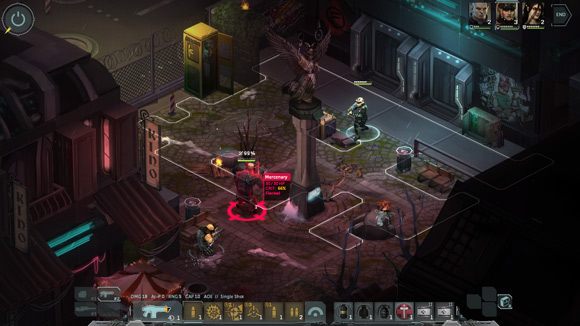
2. Shadowrun: Dragonfall
I played this game's predecessor, Shadowrun Returns, in 2014, and felt that it was a great proof of concept but not quite ready for the Top 10.  Dragonfall improves on it in every way.  It's a mission-based PC RPG set in the cyperpunk-meets-fantasy world of Shadowrun.  It's got dark, grim settings a la Blade Runner, very well-written text (and lots of it), atmospheric music, a variety of character classes and abilities to choose from, and tense tactical combat in the X-COM/Wasteland style.  That it takes place in Berlin and features the occasional dose of German was just the icing on the cake for me.  Pillars of Eternity was great, but the unique setting and more enjoyable combat propelled Dragonfall to near the top.  I couldn't stop playing it, and look forward to more games in this series.


I. Etrian Odyssey IV
I played a good chunk of the original EO, but missed out on the series until diving back in with the fourth iteration.  This one seems to have perfected the series' mix of old-school dungeon crawling (featuring the ever-so-addictive practice of drawing your own maps on the 3DS' touch screen) and tense, challenging turn-based battles.  The story is forgettable, but the gameplay is king.  Tons of exploration and interesting locations, tough but winnable fights, ten character classes with interesting abilities that go far beyond the fighter'/mage/'rogue standards, and a nice, soothing presentation that belies the depth and challenge waiting underneath.  I couldn't get enough of it, and gladly sunk 60 hours into completing it, which is easily my most notable gaming achievement of the year and makes Etrian Odyssey IV my favorite game of 2015.     

Friday, July 24, 2015

My Top 25 Board Games of All Time, 2015 Update

It's been a few years since I first created this list, so with several new additions and reorderings I figured it was a good time to post an update.  I'm nowhere near as enamored to the "new hotness" as many board gamers, so my favorites tend to have staying power, and it takes a truly great game to wrestle its way onto this list.  Rules for appearing here - I have to own the game and played it at least twice, and card games were excluded.

1. Power Grid

Image result for power grid game

Still sitting pretty at #1.  Some people find the theme of Power Grid (building a power network) boring. I think it's cool and certainly more interesting than most euro-style games that involve trading various goods in the Renaissance. Plus the art that goes with it reminds me of Mr. Burns' power plant in the Simpsons. Beyond theme and aesthetics, though, I love the varied gameplay in PG. It has auctions, an economic engine, resource management, network-building, and an all-important turn order mechanism. I've never seen a game make so many players stand simply out of tension.  I've been hooked since coming in 2nd place in a 6-player game at Origins 2008 by just four dollars. I still don't win very often, but will never turn down an opportunity to play Power Grid, and know that I'll have a blast doing it. 

2. El Grande

Image result for el grande game

The grandfather of Euro-style area control games is still the best, 20 years after its release and winning the Spiel des Jahres in Germany.  Its gameplay is the epitome of elegant design, and yet El Grande can make me even more tense than Power Grid, waiting to see what other people are going to do and just hoping I can make the right play to control those key Spanish provinces and score big points. And just how many cubes are in the Castillo???

3. 1960: Making of the President

Image result for 1960 making of the president

This battle between JFK and Nixon remains my favorite exclusively 2-player game.  Every contest is a complete reenactment of the 1960 election from start to finish, with players using cards to seize control of various states and win their electoral votes in November.  Election Day is simply a great climax, and counting up all the electoral votes to determine the winner is one of my favorite moments in gaming.  The cards and map also provide an unparalleled history and civics lesson in American politics.

4. Suburbia

Image result for suburbia game

The strongest debut to my updated list, I just can't enough of this tile-laying "SimCity on a board."  Making your various residential, commercial, industrial, and civic tiles work together to produce awesome boosts to your income and reputation is truly rewarding, but controlling the limiting effects of your suburb losing its small-town appeal makes for a tense balancing act as well.  I recently added the expansion, Suburbia, Inc. to my collection, which introduces more tiles, bonuses, and long borders that can have truly dramatic effects - will you really take the hit to your population in exchange for the easy income boost the Toxic Waste Site offers?  Suburbia is the place for any armchair urban planner to live out their wildest designs.

5. Twilight Struggle

Image result for twilight struggle game

TS is similar to 1960 but instead recreates the epic Cold War conflict between the U.S. and the Soviet Union.  Unlike most gamers, I slightly prefer 1960 because Twilight Struggle can have a wildly uneven play length - maybe you only get to see half of the game, and if you do see it all, it might take 4 hours or so (with slower players). Still, the epic scale and historical detail of this 2-player reenactment of the Cold War are unmatched.

6. Tikal

Image result for tikal game

From Wolfgang Kramer, designer of El Grande and master of tension, Tikal presents players with a bunch of agonizing decisions on every turn, as  they use action points to explore the Mayan jungle to uncover temples and treasures. Of course, you can never do as much as you'd like on your turn. It's a great mix of area control, set collection, and wise allocation of scarce actions.

7. Acquire

Image result for acquire game

This ancestor of modern boardgaming endures.  Sid Sackson's 1962 classic is still hard to beat for accessible and surprisingly fun stock market games. No victory points needed here - just "acquire" the most cash through strategic tile placement, wise stock purchasing, mergers, and buy-outs to be the king of Hotel Row. It's very popular every time I've brought it to the table.

8. Chinatown

Image result for chinatown game

Another strong debut, Chinatown is the best pure negotiation game I've ever played.  Trade lots, shop tiles, and cold hard cash with other players to try to build contiguous blocks of businesses - the larger your businesses, the bigger cash bonus you get every round.  The haggling mixes true cost-benefit analysis with simple game theory and "I'm gonna jack up the price just to screw him" vendettas.  Raucous and always memorable.

9. Manhattan Project

Image result for manhattan project game

Manhattan Projects wins the award for my favorite worker placement game, a mechanic that basically involves placing dudes on a board to get stuff which you use in some way to earn points.  The unique theme in MP has you collecting yellow cake, uranium, plutonium, and the like to build atomic bombs.  The simple gameplay keeps the game flowing quickly, which I appreciate, and the various buildings allow you to put together useful combinations as you formulate your strategy of focusing on plutonium or uranium bombs, or a bit of both. 

10. Lords of Vegas

Image result for lords of vegas game

Lords of Vegas is a bit like Chinatown, in that it involves building lots and trading, but it's less pure negotiation, as players try to build big casinos on the Vegas Strip and become their boss by rolling higher dice than their opponents.  It's the best translation of the Vegas theme to a board game I've played - there's lots of gambling involved, but you always know the odds and can maneuver your position to tilt things in your favor.  I've seen games of this come down to a single dice roll for control of a casino, and while more "strategic" gamers might be turned off by that, it really adds to the excitement and flavor of this excellent game.

11. Flash Point: Fire Rescue

Image result for flash point game

Flash Point has unseated Pandemic as my favorite cooperative game.  Moving around a burning building trying to rescue victims from Grandma to the pet cat is really appealing, and the multiple firefighting roles and multiple options for gameplay give this one a lot of variety and replayability.  Plus the dice-rolling involved in spreading the fire - and firing the powerful deck gun - is just more fun than pulling cards in Pandemic.  This is a toughie, as the house is never far from collapsing on you, but that makes pulling off the successful rescue that much sweeter.

12. Kingsburg

Image result for kingsburg game

Kingsburg is another worker placement game, but has a unique spin in that your "workers" are dice that you roll and then place on various numbered advisers in order to get materials used to build buildings and recruit soldiers to defend the homeland.  The sheer number of buildings allows for many different paths to victory - you can't build them all - and the yearly defense against the oncoming hordes is a tense, fun moment.  It's also quite accessible and popular with those I've introduced it to.

13. Jet Set

Image result for jet set board game

Take the route-connecting of Ticket to Ride and make it so players can build anywhere, but actually have to pay to make routes (instead of collecting sets of same-colored cards that magically turn into routes) and you've got the basics of Jet Set. It's a tense route-building game with a nice little economic engine to boot, where money is always tight so efficiency is rewarded.

14. Rails of Europe

Image result for rails of europe board game

My favorite iteration of the heavier train games, Rails of Europe fixes the issues of the original Railroad Tycoon and offers a deep game of buying stock, delivering goods, and building a railroad network in Europe without the scariness or ruthlessness of its mean cousin, Age of Steam.

15. Vegas Showdown

Image result for vegas showdown game

VS is a great auction and tile placement game in which players bid on different rooms to add in building their ultimate hotel-casino. It's really fun to expand your casino and grow your income by adding such features as the Five Star Steakhouse or High Rollers' Room. The tight auctions ensure that no player is ever out of the game.

16. Ticket to Ride: Marklin

Image result for ticket to ride marklin game

The best Ticket to Ride, in my humble opinion. Two factors that make it so are the even mix of long and short routes as well as your ability to choose how many of each you draw, and the placement and movement of passengers. These elements elevate Marklin above the other TtRs to the next level of strategy and tension. Toss in the game board of Germany and train cards featuring actual cars and locomotives and I'm sold.

17. Airlines: Europe

Image result for airlines europe game

AE is Alan Moon's third design of essentially the same game. It takes some of the card selection and route-building mechanics of Ticket To Ride (also by Moon) and adds in a stock market very reminiscent of Acquire. This makes for an engaging economic game that's perfect to introduce to new gamers who have played either of its influences and are looking for the next step.  What's the difference between this and Jet Set?  In Jet Set the airlines are privately owned (you are solely responsible for your fate), in Airlines they are public - as in Acquire's hotels, every player can grow any airline they wish, and hope to capitalize on their investments without helping others too much.

18. Prophecy

Image result for prophecy board game

I don't care for many fantasy adventure games. In my experience they're too long and convoluted, and downtime between your turns can be excruciating. Prophecy is by no means short (2-3 hours) but it's manageable and the rules are simple enough that you won't spend half the time figuring out modifiers to your dice rolls. You really feel like you're building a character RPG-style as you wander around the board slaying monsters, finding loot, and increasing your strength and magic.

19. Small World

Image result for small world game

Small World is a euro-style wargame in which players take control of a certain race and use it to take over as much of the land as possible before it's worn out. The clever "In Decline" mechanic then lets you pick a new race while tokens from your old race still earn you points as long as they're on the board. Small World gets top marks for replayability, as each race has a special power, and races are attached to further special abilities that appear in different combinations in every game (Dragon Rider Halflings FTW). Combine that with different maps for different numbers of players - so it scales very well - and it's a sure winner.

20. Pandemic

Image result for pandemic board game

Pandemic has taken the hardest hit on this updated list, as it's fallen out of favor compared to Flash Point in terms of cooperative games.  However, saving the world from nasty diseases remains fun and the many different roles demand different strategies every time.  To its credit, I've never taught this to someone that didn't enjoy it and, if we lost, didn't want to play it again.

21. Torres

Image result for torres board game

Sharing a design heritage with El Grande and Tikal, Torres is a fairly thinky abstract strategy game in which each player has action points on their turn that they use to place plastic castle pieces on the board and maneuver their knights onto them to score points and block other players. I'm not that great at it, but it's the kind of game I want to play more and more until I get good at it, and that's a high compliment.

22. On the Underground

Image result for on the underground board game

Tired of Ticket to Ride? Give this a try. The board is actually modeled after the London subway system. You build tracks wherever you like (again, no train cards here) to connect points on the map and try to get the world's laziest passenger to ride your lines. This makes for a more analytical experience than TtR but it's still quite accessible and a nice change of pace in the route-building genre.

23. Colosseum

Image result for colosseum board game

Colosseum has a great theme - you are the impresario in a Roman colosseum, trying to put on the best show possible to impress the plebs and nobles - maybe even the emperor himself. To do this you'll engage in auctions, trading, dice rolling, and clever resource management. A bit of a kitchen sink game, but it has some nice variety while maintaining accessibility. Bonus points for awesome names of the shows you put on - Venus' Equestrian Cavalcade, The Dialogues of Pluto, etc.

24. Catan Histories: Settlers of America: Trails to Rails

Image result for catan histories trails game

Trails to Rails breathed new life into Catan for me, the first designer board game I ever played but one that had grown stale and annoying due to its heavy luck factor.  Trails mitigates the luck a bit by allowing players who don't collect resources to collect gold that they can trade for such (not to mention increasing the number of resource spaces altogether), and introduces train game mechanics to make the goal to be the first to deliver goods to new cities rather than racing to ten points.  I really took to this new direction and added level of strategy.  It's not a short game, but I find it much more fulfilling than vanilla Settlers of Catan.

25. Giants

Image result for giants easter island board game

Another "pick up and deliver" game that is essentially a train game in hiding due to the rather unique theme of building Moai statues on Easter Island and moving them across the isle to their rightful place.  Also includes some worker placement and uneasy/unwilling cooperation with other players in a race to secure the best statue locations.  The highlight is definitely the components, such as the little Moai statues - the game is almost overproduced in that way.