Monday, February 25, 2013

Glenn Beck vs. Wrestling: A Match Made in AWESOME

Oh, wrestling.  Sometimes you're stupid, sometimes you're tragic, and sometimes you're just dumb fun.  This is one of the dumb fun moments.

First, a little background so you know my perspective.  I was never into wrestling as a kid.  Sure, I knew who Hulk Hogan and the Undertaker were through cultural osmosis, but I never watched the TV shows.  Then, in my sophomore year of college, I lived with a roommate who watched it fairly religiously, and so I had my first real exposure.  I was skeptical at first, but was quickly drawn in.  Let's face it - as they say, it's a soap opera for males (and some ladies).  Everything about it is over the top, and taken lightly, it can be rather exciting entertainment for its intended audience.  The storylines can be amusing if cliched, some of the humor is actually funny, and the hard work of the wrestlers should be appreciated - no matter how "fake" it is, it does require talent, and some of them are genuinely great athletes.  It has its fair share of tragic real-life stories and wrestlers dying young, but what field of sports or entertainment doesn't?  I was an ardent WWE fan for about three years.  Then I lived in Germany for a year, and found it hard to pick back up when I returned.  The storylines seemed to have cycled through again, and I didn't find the crop of wrestlers circa 2004 to be as interesting.  I moved on to other pursuits.

But I don't begrudge those who still enjoy their rasslin'.  Some holier-than-thou liberals who have obviously never seen a wrestling show buy into the stereotype that all wrestling fans are hillbilly redneck "marks" who believe it's real.  Sure, there's some of that, but there are also a lot of wrestling fans who appreciate it at a "higher" level for the reasons I stated above.  And even they are naturally going to cheer for the heroes and boo the villains at a show.  It's part of the fun.  And believe it or not, many of these fans are progressive-minded.  The face of wrestling changes with the face of America, and that's quite apparently in the latest "controversy."

The WWE is no stranger to the political and social issues of the day.  They are often played up elaborately to elicit fan reactions and higher TV ratings.  It's a business, after all.  In the past, this has been generally been done by making the "heels" (bad guys) portray some aspect of anti-Americanism or a trait that goes against good old-fashioned American values.  Thus Sgt. Slaughter, a huge "face" (good guy) in his day, turned traitor and became a Saddam sympathizer in Gulf War One.  Later there was Billy and Chuck, two flamboyantly gay heels.  And after 9/11 there was a shifty Muslim heel named Hassan.  Portrayals of women are sadly often fairly misogynistic, though there have been some great lady wrestlers.   So yeah, the WWE generally hasn't been at the forefront of social change, and while some people admittedly take these portrayals too seriously, others recognize it as over-the-top entertainment.  WWE's values may be about to change along with the changing demographics of its fan base, however.

Latinos make up a large and growing segment of WWE's fans, which should come as no surprise given the traditional popularity of lucha libre wrestling in Mexico and elsewhere.  There have certainly been Latino wrestlers in the WWE before, but their portrayal hasn't always been stellar (even as a good guy, Eddie Guerrero's motto was "lie, cheat, and steal").  The time has come, however, for the WWE to make a big push, and it's come in the "face" of hero Alberto Del Rio.

Now, every good face needs a heel to feud with, and so the WWE's story wizards have come up with the character of Jack Swagger, an immigrant-hating, Tea Party-loving Real American.  He and his manager Zeb Coulter (which has to be a take on conservative firebrand Ann Coulter) have started a major feud with Del Rio, declaring that all illegal immigrants should be sent home.  Of course, that feud will come to a head in their match at WrestleMania in April.

The Beck says, "Know your role and shut your mouth!" 
Interestingly, this situation isn't that far different from a feud that the heel John Bradshaw Layfield had with Guerrero in the mid-2000s.  Conservatives' skins must've been thicker back then, though, because now their heads are exploding.  They are led by Glenn Beck, who has railed repeatedly against this "racist" portrayal of a Tea Party American by "stupid wrestling people."  His outrage was enough to cause Swagger and Coulter to step out of character, recording a YouTube video in which they basically say "Dude, it's entertainment.  He's the hero.  We're the villains.  Deal with it and grow up."  They even invited Beck to appear live on Raw, WWE's flagship show.  So far, Beck has refused.  Either way, it's making for good ratings.  It has me contemplating tuning in for the first time in years, just to see how it plays out.

Of course, the irony in all this is that the owners of WWE, Vince and Linda McMahon, are big Republicans.  Linda twice tried to run for the Senate from Connecticut, trying to pass herself off as a moderate (the only way a Republican could win a statewide race in CT).  It didn't work.  They may be failed politicians, but no one ever accused the McMahons of being bad business owners.  While their political and social tropes of the past have favored the red state audience that is admittedly their core, they can tell the tide is turning.  It's now good business to be anti-Tea Party, even if their portrayal is a hyperbolic version of such.  As a result, millions of Real American wrestling fans are now booing a self-proclaimed Real American.  Furthermore, in the process we have another example of the tensions currently tearing at the conservative foundation between ideologues like Beck and the establishment McMahons.  Somebody pass the popcorn - this could get good.

Lastly, I would be amiss not to mention the possibility that Beck is in on the whole thing.  Such feuds with real-life personalities are not unknown to the WWE, with the most famous example probably being comedian Andy Kaufman's battle with Jerry "the King" Lawler as depicted in the movie Man in the Moon.  Beck seems way too self-serious to be drawn into something like that, however.  But who knows - I could be proven wrong.  The political leanings of the McMahons suggest it's not completely outside the realm of the possible.  With better ratings for everyone involved, what's to lose?  After all, Beck hosts Ted Nugent on his show and fears that the UN will destroy the American way of life.  His standards aren't exactly high. 

Saturday, February 23, 2013

Archive: Top Ten PS1 Games

Continuing on from my top ten SNES games, let's move forward a little in time to the Sony PlayStation.  Before this time I had always been a Nintendo fanboy, but by now I was totally hooked on RPGs - especially Squaresoft ones.  So while the Nintendo 64 excited me immensely (the first pictures I saw of Mario 64 blew my mind), when Square decided it would abandon Nintendo for Sony and its fancy CDs, I went with it, as I could only afford one system.  Given the dearth of RPGs on the N64, and the lack of good games in general (despite many of the good ones being true classics), I never regretted the decision.  So here are my top ten for the PSX - and of course, they are heavily biased toward RPGs.

1.  Final Fantasy Tactics
Some of the games on this list were hard to pick and order, but this was a no-brainer for numero uno.  This was the first strategy RPG I ever played, and remains just about the best.  Intense, strategic battles, great class system, and an almost incomprehensible story (what else is new).  It couldn't be beat.


2. Vagrant Story
A bit of dark horse candidate, as this game was released late in the PSX lifespan and I don't think it got the attention it deserves.  Interestingly, it takes place in the same world of Ivalice as FFT.  It's a long action RPG/dungeon crawler with lots of loot, exploration, weapon customization, and block puzzles.  Fights required careful selection of body parts to weaken opponents, and the boss battles could be truly epic.  The interesting story was told comic-book style with impressive (for the PSX) in-game animation and speech bubbles.  Fans of the genre who missed this gem should really check it out if they have a chance (I think it might be on PSN).


3. Chrono Cross
The long-awaited sequel to Chrono Trigger had, perhaps, insurmountable expectations to live up to.  Upon reflection 12 years later, I do believe it deserves this high of a spot on this list.  The story was a great twist on the first game, and some parts really got to me, though learning the tragic fate of the beloved CT crew was truly depressing.  The battle system was fairly unique and interesting, though I was disappointed it didn't carry forth CT's no-battle-screens traditions.  And, as anyone who's played it knows, there are too many playable characters.  But the graphics and sound were amazing for the PSX, and the story twists did keep me guessing.


4. Dragon Warrior (Quest) 7
Every time DQ7 is brought up on podcasts I listen to, it generally gets trashed as pretty much the worst in the series, for reasons I don't especially understand, because you can apply them to every DQ game.  Yes, it's really long, and the graphics and sound aren't exactly impressive.  But I thought the world-building the player engages in - recreating the world one landmass at a time through finding pieces and putting them together in a puzzle to bring that area to life - was innovative and cool.  And I will defend its job/class system as the best in the series.  It was cool to level up a character as a Mariner and a Thief and then turn them into a Pirate with no loss of experience or skills, unlike other DQ games.  Last, the story was just fun - you spend all this time working to resurrect God, and he's fine and all for a while, but then turns out you've been a stooge for the Demon Lord all this time.  And then you can fight the real God post-ending in a bonus dungeon.  What other game can make that claim?


5.  Crash Team Racing
The mid to late 90s witnessed a plethora of Mario Kart clones, and almost all of them were crap.  CTR stands out as the only truly worthy imitator.  Personally I found it more intense and faster than Mario Kart 64, and appreciated the ability to power-up your items with enough fruit.  It also added a cool adventure mode that  required you to complete different challenges in each track, like time trials.  Crash Bandicoot may not have been the most enduring Sony mascot, but his kart racing game has stood the test of time.


6.  Xenogears
I've never been too much of an anime fan, and this game was my first real exposure to its tropes, turned into video-game form.  At the time, it blew me away.  Incredibly long, convoluted story with mechs, split personalities, and weird Christian references including characters getting crucified?  Sign me up!  The battles were generally fun too, though I preferred hand to hand, with some awesome combo finishers (Citan's sword), to the mech combat.  The soundtrack was also astounding.  It's a shame the second disc had to cut everything so short (and that it's so noticeable) - it will always leave you wondering what might have been.


7.  Final Fantasy 9
The highest-ranking numbered FF on my list.  I know it's not everyone's favorite, but I really enjoyed all the callbacks and references to earlier games in the series.  I also appreciated that the skill-learning system was much more straightforward this time around, and the summon animations were mercifully shorter.  Plus, this game has Vivi the black mage, and Vivi is cool.


8.  Alundra
The closest game the PSX had to a Zelda-style adventure.  This game could be incredibly frustrating in parts due to sections requiring deft platforming skills and truly devious puzzles.  This is the first game I remember looking up hints for on the Internet.  But if you could figure things out on your own it gave you a great sense of satisfaction.  The combat was fun, the story interesting, and the overworld nice and big with lots of secrets to uncover, very reminiscent of Link to the Past.  Of all the games on this list, this is the one I most want to revisit, if only to see if I can figure out those damn puzzles myself this time.


9.  Medal of Honor and Medal of Honor: Underground
With the exceptions of GoldenEye and Perfect Dark on the N64, console first-person shooters were of questionable quality until Halo came along and revolutionized the control scheme.  Looking back, I really don't know how I managed to play these games with regular PS1 controller, even without the analog stick at first.  But it was definitely the (mostly) realistic WWII setting that drew me in.  I loved that the Nazis actually spoke German to you and I could understand it.  The game had me from its opening "Conversational German for the American Soldier" demo movie.  I put both on here because they are very similar and deserve a spot, though Underground gets bonus points for featuring a female protagonist of the French Resistance, taking the campaign to North Africa, and including a fun bonus mission set in Himmler's occultish castle where you get to mow down knights with your BAR.  Who needs Nazi zombies?


10.  Final Fantasy 8
I bought a PlayStation for Final Fantasy 7, and I loved it at the time.  Looking back though, it has not aged well, for reasons too long to get into here.  Its sequel also has its set of issues, but I decided it deserves a spot for ideas it introduced to the series, many of which have never been used since.  The more realistic graphical style was a nice touch, as was the idea of enemies at least somewhat leveling with you.  Drawing magic and the junction system were novel ideas, and I learned to abuse them to the point that I could actually beat the ultra-hard optional bosses, the only FF I've ever done that in.  So FF8 claims the "final" spot on my list for daring to be different.

Archive: Lies at the RNC

The general theme of the Republican National Convention on day one (and, I suspect, subsequent days) was "Liberals / Democrats hate America and want people to fail because then the government can control everything."  It would take a thesis to argue every way this is wrong, so instead I'll focus on three specific lies that support this idea and can easily be disproven with accurate quotes and verifiable facts.

Lie 1: President Obama hates American entrepreneurs and thinks they can't do anything on their own.

I was shocked by the extent to which the Republicans have built their campaign around one slightly awkward turn of phrase by Obama taken completely out of context.  Of course, I refer to "you didn't built that."  It was a chorus of the entire evening, even plastered on signs.  Notice, however, that they never played the actual clip from Obama's speech, because in context it ruins the entire point.  So, here it is:

It should be plain to anyone that he's saying that people have help from others and reap the benefits of infrastructure, education, and perhaps loans or business assistance from the government.   But that's kinda hard to argue with, so Fox News took our 4 words and turned them into a sound bite that drives the whole campaign.  Interestingly, the refrain of Monday night was "we built that," suggesting that yes, people collectively worked together to build America - thus driving home President Obama's point.  They spent the entire night channeling the ghost of Ayn Rand to decry any form of public assistance, and then both Ann Romney and Chris Christie touted the benefits of government-funded scholarships to government-funded higher education institutions.  You can't have it both ways.

Lie 2:  President Obama is solely responsible for the huge national debt.

According to the Republicans, apparently, the federal government didn't spend a dime before January 20, 2009.  Let's review.  President Clinton left the country in 2001 with a budget surplus and on track to pay off the debt in 10 years.  Then came the Bush tax cuts, the wars in Afghanistan and Iraq, and the economic meltdown of 2008.  This graph illustrates the portions of our debt attributed to these and other sources:


The only portion of this clearly attributable to Obama is the recovery efforts in response to the economic crisis.  (We'll save the Keynesian debate for government spending to stimulate the economy for another day.)  The wars and tax cuts began as voluntary choices under the Bush administration, for which we are now reaping the full costs.  But there wasn't a single mention of W last night.  Cristie actually said "It doesn't matter how we got here."  And I thought Republicans were the party of personal responsibility?  It does matter, Chris.  You can't preach about "shared sacrifice" while ignoring 8 years of fiscal irresponsibility by the hero of neoconservatism.

Lie 3: President Obama abolished the work requirements for the welfare program.

This is key to their argument that welfare recipients are generally lazy bums who have no desire to work, as if they know everyone's story.  I agree that our welfare system is in need of reform, but the assertion above is simply not true.  What Obama actually did was give states more flexibility to change the requirements - more states' rights!  Something Republican governors have been clamoring for (apparently, now we now why).  My homestate governor, Sam Brownback (R-KS), admitted to this today.

That's it for now.  After listening to Paul Ryan's speech, I need a break.

Archive: Top Ten SNES Games

Image result for super nintendo box


Of all the game systems I've played, the Super Nintendo probably had the greatest impact on me.  I loved the NES, but was a bit young to appreciate it for its full lifespan and entire catalog.  However, the SNES came out when I was 10, with new games released till I was 15 - perfect for my formative game-playing years.  It was the SNES that spurred my life-long love of role-playing games, as my list will attest.  So, without further ado, here are my top 10 favorite Super Nintendo games of all time.  Of course, I make no claim that these are "the best" games, and welcome other opinions and discussion.

1.  Final Fantasy 3 (yes, I know it's really 6)
The magnum opus of Japanese-style RPGs.   A great overarching story with the world destroyed halfway through married with a cast of interesting characters, each with their own individual tales to tell.  Nobuo Uematsu's masterpiece soundtrack.  Engaging battles and great character development.  No successive Final Fantasy has lived up to the epicness that is this game.


2.  Chrono Trigger
CT has perhaps the coolest use of time travel ever in a video game.  It also changed things up by not having a separate battle screen (something rarely duplicated since in a turn-based RPG) and including awesome double and triple tech combo attacks for your characters.  Great soundtrack, intriguing characters (Magus!), memorable locations (Zeal!).  I think it's also accessible enough to appeal to gamers that typically shy away from RPGs.  It was tough picking between this and FF3 for #1, but in the end the grand scope of FF3 barely won out.  However, Chrono Trigger will not disappoint anyone that picks it up.  It is timeless.


3.  Final Fantasy 2 (yes, I know it's really 4)
When this game came out I went absolutely bananas over it, and probably drove my parents crazy looking for it (this was before eBay and Amazon).  It cemented my love of RPGs forever.  Looking back, yes the story is pretty simple and cliched, but 12-year-old me loved it.  I could not get enough of the tale of Cecil and his crew.  It may have been a proving ground for what was to follow in FF3, but everything about it stands up on its own merits.


4.. Super Mario Kart
This is the reason I bugged my parents to get me a SNES for Christmas.  The pure racing and item-chucking action was just so much fun.  My dad and I played this for hours, and it didn't get better than Battle Mode.  Personally, this is my favorite Mario Kart, despite the predictable enemy paths and few dumb items (woohoo the coin!).  It's also the hardest and, I think, fastest.  What an accomplishment when you finally take first on the 150cc Special Cup.  Its Rainbow Road was the first, and still best.

5.  The Legend of Zelda: A Link to the Past
My favorite Zelda.  I like it better than any 3D Zelda that followed.  It's the perfect blend of action,  puzzle-solving, and light role-playing.  In later Zeldas I could get frustrated by some puzzles, and they were just too talky.  Obviously I don't mind dialogue in games, but in Zelda I mainly want to hit things with the Master Sword.  Link to the Past had the perfect balance.


6.  Secret of Mana
The only time I ever got my dad to play an RPG-ish game.  I had to keep things pretty straightforward for him - he was the guy, and he beat things with the sword.  Still, it was a lot of fun. SoM features a huge world to explore, tons of weapons and spells to power up, great boss fights, and a memorable soundtrack.  The opening theme with the Mana Tree illustration and smooth animation of the birds is unforgettable.


7.  Earthbound
The first RPG I played with a non-medieval fantasy setting.  It's a great Japanese take on small-town Americana.  A quirky sense of humor with challenging Dragon Quest-style battles   An adventure worth undertaking, and when you come home, that digitized voice of your mom saying "I missed you" gets me every time.


8.  Super Mario World 2: Yoso hi's Island
At a time when the game industry was beginning to go ape-shit over blocky 3D polygons, Yoshi's Island came along to show us 1) it's all about the gameplay and 2) 2D games can still look awesome.  The seemingly hand-drawn art is perhaps my favorite graphic design on the system.  The gamplay, of course, is also great, with varied levels and lots of stuff to do.  Yes, baby Mario is annoying, but keep him on your back and you won't have to hear that wail, a problem that was mainly amplified by Nintendo's stupid decision to put the babies in subsequent sports games for some treason.  Bonus points for the fortress music sounding like it belongs in an RPG.  (As for the original Super Mario World, it's a great game, but I think I was so oversaturated with it when the SNES came out from playing through rentals, at Wal-Mart, and at friends' houses, that when I got a SNES I didn't really have the desire to own it, and never did.)


9.  Ogre Battle
Ogre Battle features a great mix of strategy and RPG elements that has never been exactly duplicated, even in following Ogre Battle / Tactics Ogre games.  It also has a morality system that meant that if you want to get the "best ending," you can't run roughshod over your enemies, but rather have to beat them in a respectable manner.  Nobody likes an asshole, I guess.  All the different character classes you can get through either good or evil paths give the game great replayability.  One flaw - needs an in-mision save option - some of those levels are hours long.


10.  Terranigma
This one is a bit of a cheat, since it never came out in the US so I played it on an emulator.  It's a great action RPG that followed SoulBlazer and Illusion of Gaia, but surpasses them.  A huge world with real-world inspired locations and exciting combat.  For American gamers, it's a lost gem.


If I'm to be fair, however, and only include games that I actually played on the SNES as a kid, then....

Alternate 10.  Tetris Attack
The match-3 puzzle game Bejeweled wishes it was.  Nuff said.


Honorable Mentions: Super Mario RPG, Lufia 2: Rise of the Sinistrals
Japanese-only Honorable Mentions (I played fan translations): Final Fantasy 5, Dragon Quest 5

Archive: Top 25 Board Games

At the end of every year almost every website on earth produces some sort of top ten list. Well, I'm not satisfied with just the past year. I thought I would throw out my personal favorite ten board games. This is a list I've thought about for some time, but never got around to it or could quite figure out how I would order them. But I finally think I've nailed it down. So, without further ado, here we go.

10. Jet Set
The bottom of this list was actually harder to pin down than the top. Eventually I decided on Jet Set for the number 10 spot. Take the route-connecting of Ticket to Ride and make it so you actually have to pay to make routes (instead of collecting sets of same-colored cards that magically turn into routes) and you've got the basics of Jet Set. It's a tense route-building game with a nice little economic engine to boot.

9. Rails of Europe
Rails of Europe fixes the issues of the original Railroad Tycoon and offers a deep game of buying stock, delivering goods, and building a railroad network in Europe without the scariness or ruthlessness of its mean cousin, Age of Steam.

8. Kingsburg
I like games where you start out with nothing and make some choices on your way to building up something cool. However, I generally dislike heavy Euro-style games where you have to go through 5 steps before you can do anything remotely interesting. In Kingsburg, you just roll some dice. That's its main strength, and probably what makes it very well liked by pretty much everyone I teach it to.

7. Tikal
Speaking of choices, Tikal presents players with a bunch of them on every turn, as you use action points to explore the Mayan jungle to uncover temples and treasures. Of course, you can never do as much as you'd like on your turn. It's a great mix of area control, set collection, and wise allocation of scarce actions.

6. Pandemic
If you have one cooperative game in your collection, this should be it. Saving the world from nasty diseases is just fun, and for some reason has yet to get old. I've never taught this to someone that didn't enjoy it and, if we lost, didn't want to play it again.

5. Acquire
Sid Sackson's 1962 classic is still hard to beat for stock market games. No VP needed here - just "acquire" the most cash through wise stock purchasing, mergers, and buy-outs to be the king of Hotel Row. Also very popular every time I've brought it to the table.

4. Twilight Struggle
I, ahem, struggled on the order of this and number 3 below. In the end I put Twilight Struggle at number 4 because of the uneven play length - maybe you only get to see half of the game, and if you do see it all, it might take 4 hours or so (with slower players). Still, the epic scale and historical detail of this 2-player reenactment of the Cold War are unmatched.

3. 1960: The Making of the President
Many users on BoardGameGeek would cry foul at my ranking 1960 over TS, but hey, it's my list. Contrary to TS, I love that every game is a complete reenactment of the 1960 election from start to finish. Election Day is simply a great climax, and counting up all the electoral votes to determine the winner is one of my favorite moments in gaming.

2. El Grande
The grandfather of Euro-style area control games is still the best. I don't think any other game makes me as tense as El Grande, waiting to see what other people are going to do and just hoping I can make the right play to control those key Spanish provinces and score big points. And just how many cubes are in that damn Castillo???

1. Power Grid
Some people find the theme of Power Grid (building a power network) boring. I think it's cool and certainly more interesting than most Euros that involve trading various goods in the Renaissance. Plus the art that goes with it reminds me of Mr. Burns' power plant in the Simpsons. Beyond theme and aesthetics, though, I love the varied gameplay in PG. It has auctions, an economic engine, resource management, network-building, and an all-important turn order mechanism. I've been hooked since coming in 2nd place in a 6-player game at Origins 2008 by just four dollars. I still don't win very often, but will never turn down an opportunity to play Power Grid, and know that I'll have a blast doing it.

11-25:

11. Ticket to Ride: Marklin
The best Ticket to Ride. Two factors that make it so are the even mix of long and short routes and your ability to choose how many of each you draw, and the placement and movement of passengers. These elements elevate Marklin above the other TtRs to the next level of strategy and tension. Toss in the game board of Germany and train cards featuring actual cars and locomotives and I'm sold.

12. Vegas Showdown
VS is a great auction and tile placement game in which players bid on different rooms to add in building their ultimate hotel-casino. It's really fun to expand your casino and grow your income by adding such features as the Five Star Steakhouse or High Rollers Room. The tight auctions ensure that no player is ever out of the game.

13. Small World
Small World is a euro-style wargame in which players take control of a certain race and use it to take over as much of the land as possible before it's worn out. The clever "In Decline" mechanic then lets you pick a new race while tokens from your old race still earn you points as long as they're on the board. Small World gets top marks for replayability, as each race has a special power, and races are attached to further special abilities that appear in different combinations in every game. Combine that with different maps for different numbers of players - so it scales very well - and it's a sure winner.

14. Airlines: Europe
AE is Alan Moon's third design of essentially the same game. It takes some of the card selection and route-building mechanics of TtR and adds in a stock market very reminiscent of Acquire. This makes for an engaging economic game that's perfect to introduce to new gamers who have played either of its influences and are looking for the next step.

15. Memoir '44
A wargamer I am not, but Memoir '44 is the wargame for non-wargamers (some die-hard grognards will refuse to even call it a wargame). It's a 2-player squad-level reenactment of several key battles during the march to Germany in 1944. Expansions also add the Eastern Front and Mediterranean and Pacific theaters. The different scenarios pack a lot of variety and the relatively simple rules and quick length ensure that just about anyone can get into throwin' some dice and killin' some dudes.

16. Prophecy
I don't care for many fantasy adventure games. In my experience they're too long and convoluted, and downtime between your turns can be agonizing. Prophecy is by no means short (3 hours) but it's manageable and the rules are simple enough that you won't spend have the time figuring out modifiers to your die rolls. You really feel like you're building a character RPG-style as you wander around the board slaying monsters, finding loot, and increasing your strength and magic. I generally don't like to play board games solo (that's what video games are for), but Prophecy has a solo variant that I actually enjoyed. That's the mark of a good game.

17. Torres
Torres is a relatively new addition to my collection, and I've only played it twice, but I've really taken to it. It's by the same designer as my #7 game Tikal (Wolfgang Kramer), and is similar in that each player has action points on their turn. It's a pretty abstract game in which players place plastic castle pieces on the board and maneuver their knights onto them to score points and block other players. It's quite thinky and I'm not that great at it, but it's the kind of game I want to play more and more until I get good at it, and that's a high compliment.

18. Samurai
The only entry on my list from the good Doctor, Reiner Kinizia. I like Samurai because it's pretty deep in strategy but plays fairly quickly (45 minutes). You place tiles on the board to try to capture different kinds of pieces - yup, the theme is quite pasted-on. And the scoring is also a little wonky - another Kinizia hallmark. But it's tense and fun and I enjoy it for its quick delve into high strategy.

19. On the Underground
Tired of Ticket to Ride? Give this a try. The board is actually modeled after the London subway system. You build tracks wherever you like (no train cards here) to connect points on the map and try to get the world's laziest passenger to ride your lines. This makes for a more analytical experience than TtR but it's still quite accessible and a nice change of pace in the route-building genre.

 20. Imperial On the surface Imperial sounds like my dream game. You play a World War I-era war profiteer who wants to make the most money by investing in countries and controlling their armies to make them more powerful and rich. It has economics, area control, and a great historical theme. Indeed, it could possibly crack my top ten - the only problem is that it seems to be a bit daunting to some players and so I simply have a hard time getting it to the table. Perhaps some day it will see enough plays to move higher on my list.

21. Colosseum
Colosseum has a great theme - you are the impresario in a Roman colosseum, trying to put on the best show possible and impress the plebs and nobles - maybe even the emperor himself. To do this you'll engage in auctions, trading, dice rolling, and clever resource management. A bit of a kitchen sink game, but some nice variety. Bonus points for awesome names of the shows you put on - Venus' Equestrian Cavalcade, The Dialogues of Pluto, etc.

22. Bootleggers
A Euro-style game that implements its theme very well - heartening to see. Players are Prohibition-era gangsters and bootleggers, trying to supply speakeasies with as much of that sweet, sweet hooch as possible. Great supply chain system with dice rolling, nice components (plastic trucks), and also by far the meanest game on my list - the potential for screwage is very high. But you are mobsters, so it fits. Just don't plan on making any friends.

23. Shogun
Another Euro-style wargame, this one taking place in feudal Japan. The combat system is great - you throw the cubes represents all armies participating in a battle in a "cube tower," and whichever army has the most cubes fall out is the winner. Another game that would probably be higher on my list if I could get it played more often.

24. Tales of the Arabian Nights
This one makes the list for being different. There is a winner in Tales, but it's much more about the journey. It's basically a choose-your-own-adventure book in board game form, set against the backdrop of the Arabian Nights. You create your own narrative, reading story excerpts out of a game, and make decisions that will often lead to both disastrous and hilarious results for your character. When someone does manage to win, the game will have been much more about the adventures you shared then the fierce competition. Also enjoyable solo, though best with others to share the stories with.

25. Shadows over Camelot
Shadows is the next level of cooperative game after Pandemic. The constant threat of a traitor in your midst means every action that every player takes will be scrutinized. Add the fun Arthurian theme (and hopefully not too many Monty Python jokes) and you have a game that will be asked for again and again until the brave knights finally prevail.

Archive: Final Final Fantasy

Even though I have a couple dozen unplayed video games in my queue (a problem exacerbated by the recent Steam summer sale) I recently felt the urge to play through the original Final Fantasy again. I'm not sure exactly why. It was the first RPG I ever played, but not the one I obsessed over and essentially changed my life - that was Final Fantasy II. However, I arguably spent more time reading and memorizing Nintendo Power's Final Fantasy strategy guide in my youth than actually playing the game. For that reason alone it left an indelible mark on my childhood.

And today, for whatever reason, I think I'm still more interested in playing through it again than other games that I played a ton as a kid, such as FFII, Dragon Warrior/Quest 3, or even Chrono Trigger. Perhaps it's the open-endedness and character customization that still appeal to me as an adult gamer. For whatever reason, I still find it gratifying to get a new weapon or spell in FF1, despite having done the same basic things in countless other games since. So I decided one more trip down memory lane wouldn't hurt, and it might be interesting (to me, if no one else) to blog about the experience. I'm hoping it'll only take about 15 hours to get through (compare that to 80+ hours for FF12), so the other games on my list won't have to wait too long.

Now, some purists will scoff at the fact that I'm playing the FF1 rerelease on the PS1 disc Final Fantasy Origins. To those I say, get with the times (meaning, an early '90s remake released in the U.S. in 2003, of a game that originally appeared in Japan in 1987). Sure, I could play through the original on an emulator, but I want to play on my big screen and enjoy the updated graphics and music, which still sounds awesome. Also I find the few "modern" amenities that the remake offers, such as clearly showing the effects weapons and armor have when equipped and more storage space for said equipment, a nice convenience that do not make the game less "hardcore." Believe me, it's still the same challenge. Your low-level characters still can't hit the broad side of a barn with their swords. The other most noticeable change is renaming certain monsters and spells to be more in line with later FF games, which has its benefits and drawbacks. While I have no problem renaming CONF to Muddle, it also means that we lose some of the greatest spell names in FF history, such as HARM and XXXX (almost as creative as Dragon Warrior's Hurt and Hurtmore). Either way, it's still not as bad as the spell renaming in Dragon Quest 8, which replaced series mainstays like Firevolt with - I kid you not - Kafrizzle. Fo shizzle, yo.

I no longer have the Nintendo Power strategy guide (or maybe it's still buried in my parents' house somewhere - not sure), so my goal for this playthrough is to explore every nook and cranny as much as possible, without looking for help whatsoever. My memory should serve well enough toward that end. In my youth I was glued to the strategy guide and followed very precise routes in the dungeons, afraid to stray from the main path. This time I plan on exploring as much as possible in an attempt to experience the game in as pure a fashion as I can, with the immense history I have still firmly lodged in my memory.

What party formation did I decide on for this quest? I wanted to do something a little different than my usual mainstays of fighter, black belt, red mage, and either white mage or black mage, depending on who the red mage replaced. I wanted to have a thief in my party, even though I've always thought they generally suck until they class-up to a ninja. They can't even steal like in every other FF game, and they're not even really as good of a fighter as the red mage due to their limited weapon selection. Still, I wanted to throw one in for the challenge. Who gets the axe then? A fighter is a must, and I love my red mages. A thief is a poor replacement for a black belt, so I decided I would go balls-out with physical power and drop the other mage from my party. This will mean the red mage will be carrying the entire magical load until the class change, but I think it'll work out ok. Only about 3 spells per level are must-haves anyway, and I'll get my healing through potions. The limited uses may hurt, however. I think the hardest part of the game will be the midsection, when frequent uses of the level 2 and early level 3 black magic spells are lifesavers - and I won't have too many available. Later on, however, you get so many items that cast spells in battle that they should make up for my lack of magical prowess. Again, I'm doing it for the challenge. Not to mention the opportunity to name my characters after board game designers. So we have Saxon (respelling of Sackson, as in Sid) the fighter, Reiner (Kinizia) the thief, Vlaada (Chvatil) the black belt, and (Wolfgang) Kramer the red mage.

Currently I'm about 2 hours in and immersed in what I believe to be the longest grinding segment of the game, before venturing into the Marsh Cave - the game's first real dungeon. (Fun fact - before I had ever heard the term "grinding," I called it "level building.") It's going well, not least because the glitch/secret spot northeast of Pravoka where you can fight super strong enemies to gain uber XP and gold is still present in the remake. I'm well on my way to restoring the Crystals. Check back later for updates on my journey.


Captain's Log: 6 hours in and ready to descend to the depths of the Earth Cave to take on Lich, first of the elemental fiends.

Since last I blogged I've slogged through the Marsh Cave, which I often thought to be one of the hardest dungeons in the game. You have to do some serious grinding before tackling it otherwise you WILL get your ass handed to you. Even at the proper levels, some characters (*cough* thief *cough*) still lack real fighting power, making them close to useless.

While playing through the Marsh Cave I discovered what I believe is a chief reason why the dungeons in FF1 still present quite a bit of tension to me. A lot of more modern JRPGs and some western RPGs (Dragon Age, I'm looking your way) only throw about three different enemies per dungeon at you - it becomes very repetitive and predictable. Not so in Final Fantasy. Most dungeons seems to have at least a dozen enemy types, and they come at you in many different numbers and combinations. In short, you never know quite what to expect, and that keeps the endless random battles from getting monotonous (in my opinion, anyway.)

My physical-based party is doing well. Now that I have the Mystic Key I've retrieved a few good weapons (finally) for the thief, the best he'll have available until he becomes a ninja. Relying on my red mage as the only caster is working out fine. I actually find myself using status-effect spells like Sleep and Dark more than I ever have, as these spells disable at least some of the enemies while my warriors pick them off one by one. Large groups of undead are a bit of a hassle, as they are not prone to sleep and I rarely want to use a precious Fire 2 spell on them. Still, they don't have many hit points and generally don't inflict much damage, so they're usually more of an annoyance than anything.

I'm anxious to see how I fare against Lich - I'm sure my thief will be useless, so it'll probably boil down to my red mage casting Fast/Haste on my fighter and black belt and hoping for the best. Stay tuned for the next update.

Archive: Wisconsin Protests 2011

I may be a bit late in coming but given my first-hand knowledge of the situation, I thought I should finally commit my thoughts on the Badger State Brouhaha to words. It's just taken me a while to figure out exactly what to say and focus on, since there's so much to write about and so much has been said already. Given that, I think there are a few things worth mentioning, and a proverbial 800-pound gorilla that no one seems to be talking about - the effects of the national defense budget on state government shortfalls.

First, I have never been a conspiracy theorist, but the more I witness the current behavior of the Tea Party crowd, the more I am convinced that this campaign is a concentrated effort on the part of rich conservatives to pit the middle and working classes against each other, so that they might push through policies they want while the rest of us are haggling over who's getting the bigger shaft. The policies and spending cuts contained in the Wisconsin state budget pit working class against middle class, public sector vs. private, union vs. non-union, etc. Meanwhile, if you are a wealthy businessman who can easily afford good health insurance and to send your kids to elite private schools, you make out like a bandit. Instead of those who are most able to contribute to the dire financial situation being asked to pitch in a little more, it's time to go after teachers et al, those "part time fat cats" who dare to make as much as $50,000/year on average in Wisconsin. Unbelievably, many who have drank the Tea Party tea readily accept that is in in their best interest (many who make less than teachers) to support the interest of millionaires at the expense of teachers and public safety workers.

Granted, the climate is ripe for such class warfare. Average wages for private-sector employees have not really risen over the past 30 years, even as many households are supported by two (or more) incomes. Meanwhile, public sector wages, due to laws and statutes governing them, have risen with inflation and largely continue to offer good benefits. You won't get rich working for the government, like you might in the private sector, but you'll have a secure job with decent pay and nice fringe benefits. The Tea Party has seized on this disparity in order to get the private working class to despite the public middle class and try to pull them down to their level in a potentially catastrophic race to the bottom of American wages.

There are two reasons for the relative decline in private sector wages that connect to the relative stability of public sector wages. First, the traditional view of the labor market no longer applies. With the globalization of the labor force, workers are never in scarce supply, and thus are not in a position to demand better working conditions and higher wages - not when your job can be outsourced to India, China, Mexico, etc. for a fraction of the cost. Conversely, and fortunately for public workers, their jobs are somewhat outsourcing-proof. I fear for the day when our kids are taught by a teacher on a TV screen being beamed in from Mumbai.

Second, in the early and middle parts of the 20th century, private sector unions helped workers get good-paying jobs that would set them up to be financially secure for life. Now, I would not claim that unions are perfect and have never caused any problems, but that's beyond the scope of this post. The point is, those private labor unions began to be dismantled at about the same time the labor force was globalized - suddenly labor had no bargaining power, and the unions were no longer there to exercise power on their behalf either. Compare that to the public sector, where unions are relatively newer but still around in many parts of the country and powerful lobbiers of government.

So while it is true that public workers are generally better off than private workers nowadays, why does that mean it's time to punish them while leaving the wealthy untouched? Public workers are highly trained professionals who will never get rich in their positions, and in some cases put their lives on the line to serve others. They deserve a decent way of life. Hurting them will hurt everyone else, but especially those who depend on their servicNes - for example, public schools. If a highly qualified teacher has a decision of working at an under-resourced public school or making a great deal more at a neighboring private school, it becomes easy to understand why sometimes it seems lousy teachers have pervaded our public schools. A lot of the good ones, besides some truly dedicated souls, have sought greener pastures elsewhere.

So, if we acknowledge that public sector workers deserve a decent living, how do we repair the government deficits that are sweeping the country like the latest YouTube meme? Now's the time to talk about apes. Many state budget problems can be traced back to the federal government, which has reduced funding for many programs while passing on other unfunded mandates (some argue No Child Left Behind is such). Meanwhile, no one would ever think of reducing the size of the federal defense budget, which is about a third of the national total. The figure stands at about $670 billion annually, and that does not include VA costs, intelligence, and the wars in Iraq and Afghanistan, which are approved separately as budget supplements. Just think of what trimming that budget just by $100 billion could do for schools, infrastructure, and small businesses across the country (by comparison, the total all-funds Wisconsin budget is about $30 billion annually). But no one wants to say cut defense because that looks unpatriotic or that we aren't supporting the troops. Well I hate to say it, but perhaps it is time we acknowledge that the U.S. is no longer in the position of global hegemony that it was in as recently as 15 years ago, and that it might be time to reevaluate our national priorities accordingly. If we continue to insist on projecting a global military presence with a defense budget that is many times that of many other military powers combined, we may end up spending ourselves into ruin - sort of the strategy the U.S. employed against the U.S.S.R. during the Cold War. With that in mind, I believe a scaling back is in order - let's spend some of that money on schools and roads instead of the latest in military tech. Yes, I realize that shrinking our defense budget might have some negative effects on some sectors of the economy - but putting that money back into areas where everyone can benefit might be the best way, in the long-term, to keep America competitive in the global economy of the 21st century.

Thursday, February 21, 2013

Drones Strike Above Partisan Politics


To many, the "laws of war" sounds like an oxymoron.  How can there be laws that regulate how, when, why, and where countries can legally kill people from other countries (or their own at times), and how can it be that oftentimes countries actually agree to and actually follow such laws?  It's a valid question, and this is a very complex issue, one that I've studied both at the undergraduate and graduate level.  It's interesting both for the practical policy implications and the underlying theory of what constitutes a "just war."  Since the beginning of the "war on terror" and the realization that most future wars will likely not be simple country vs. country conflicts (at least not until some major shakeup in the current order of nation-states), the laws of war have become murkier and murkier.  And the latest issue to draw heated attention both at home and abroad is the U.S. use of unmanned aerial combat vehicles, or drones.

Meet Mr. Drone.
Drones are the unmanned "hit men" of the armed forces and CIA.  They enable the targeted killing of high-value targets without placing soldiers on your side at risk, while hopefully minimizing collateral damage to innocent civilians.  From a purely military standpoint, then, their usefulness is obvious. The Obama administration has used them extensively in the ongoing fight against terrorism, including the targeted killing of at least one U.S. citizen.  From a legal and ethical standpoint, however, there are many valid questions to be asked.  Do drone strikes respond to terrorism as a crime or an act of war?  When are targeted killings justified in either case?  Does the government have the right to carry these killing out without a trial, even on American citizens?  Who qualifies as an appropriate target?

These questions require input and analysis from international law scholars, which I am not.  So I'm not going to try to answer them, nor offer a whole-hearted endorsement of the Obama administration's drone policy.  Rather, I want to point out that this is an issue that transcends American party politics.  Its roots actually reach far back in American history.

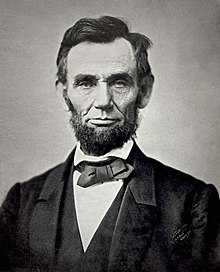
Iconic black and white photograph of Lincoln showing his head and shoulders.
Beloved president, sort of a dictator. 


Presidents have almost always tried to extend their powers during wartime.  During a kerfuffle with Napoleonic France, John Adams and the Federalists rammed the Alien and Sedition Acts through Congress, which severely limited the right of free speech.  These were thankfully repealed later.  The first great expansion of executive wartime power came under the man who most Americans regard as the greatest president - Abraham Lincoln.  Lincoln curtailed the right to a trial in Maryland, a slave state that remained in the Union and harbored many Southern sympathizers, including one John Wilkes Booth.  Moreover, since Lincoln never recognized the Confederacy as a separate country, all acts committed by the Union military against the South were acts of war inflicted upon, in Lincoln's eyes, fellow Americans.  And such were certainly not limited to military targets - just think of Sherman's "war is hell" march of destruction from Atlanta to Savannah.  Fortunately, in one of his last great acts, Lincoln relinquished such powers at the end of the war.  Unfortunately, this did not set a precedent for future presidents.

The executive power grab on matters of national security really came to the fore during the Cold War.  Remember, the last time Congress officially declared war was in 1941.  Every military intervention since that point has been at the prerogative of the executive - Korea, Vietnam, that war's expansion into Laos and Cambodia, Desert Storm, etc.  Congress, which of course has the power of the purse, has often been cowed into compliance with cries of "Why won't you support the troops??" and insinuations of unpatriotism.  Perhaps the most egregious example was the Gulf of Tonkin Resolution in 1964, which broadly authorized the LBJ administration to use military force in Southeast Asia in response to two minor incidents with North Vietnam, one of which was later proven not to have occurred.  Each success by a president to single-handedly dictate foreign policy has emboldened his successors of either party.  Congress tried to get a rein on this trend in 1973 with the War Powers Resolution.  Passed by an un-vetoable two-thirds majority, it declares that the president cannot commit military forces to action without Congressional approval, unless under an emergency.  Every president since its passage has declared the resolution unconstitutional and ignored it.

Additionally, drones are really just the latest technology enabling a practice, targeted killing, that the U.S. has engaged in many times throughout its history - if perhaps a bit messier.  Or, if short of killing, at least the deposition of people the executive didn't care for at the time.  Examples: overthrow of the democratically-elected Iran government in 1953, attempted Bay of Pigs invasion to overthrow Castro, and the CIA's support for Pinochet's coup over an elected president and his subsequent military dictatorship in Chile.  Targeted killings with drones are pretty easy to imagine as  a logical progression of these policies in response to a different threat (terrorists replacing Communist-leading leaders).

That brings us to 2001 and the beginnings of the war on terror.  That term itself is legally problematic - who is the war against?  How do we fight such a war?  What are the win conditions?  When will we know it's over?  Nevertheless, in the uber-patriotic, ass-kicking fervor that followed 9/11, Congress passed the Authorization to Use Military Force (AUMF) by votes of 420-1 (House) and 98-0 (Senate).  The AUMF authorizes the president to “to use all necessary and appropriate force” against those nations, organizations and individuals responsible for the 9/11 attacks - not limited to Afghanistan.  It is this joint resolution that forms the basis of the Obama administration's legal justification for drone strikes, adding that since a state of war exists between the U.S. and al Qaida, the Taliban, and "associated forces" (awfully broad), drones are perfectly in line with our inherent right to self-defense.  Which really just raises more questions - can we be at war with a non-state entity?  What are the conditions for such?  And how closely is a remote strike tied to the right to respond to an imminent threat?

That's where we stand today.  Hopefully I've made it clear that this is far from an "Obama-only" issue.  Some conservatives are trying to portray it as such, claiming hypocrisy for Democrats refusing to question Obama's foreign policy.  Well, if they paid attention to lefty thought circles they would know that many progressives have been very critical of drones.  Some refused to support him in the last election because of it.  I'm glad those high-minded idealists exist; they can be vital in drawing attention to important issues.  However, more pragmatic progressives, myself included, decided that it was better to support the candidate you agree with most of the time and who has a chance at winning.  After the election, you can (and rightfully should) hold his feet to the fire as much as you want.  Some seem to have this idea that if you support Candidate X you must agree with everything he or she says and does.  Not true.  There is certainly room for intra-party discourse and disagreement, though that's something that the overly rigid modern GOP often seems to disallow.  Moreover, if you think Romney would have ended the drone strike policy, hopefully the history I've outlined above shows you are most likely mistaken.

Congress, then, really needs to seize the initiative if it wants to limit executive power abuses on national security.  Its recent track record on this is less than stellar.  While it's become painfully clear that the Bush administration orchestrated the Iraq War through misinformation, outright lies, and the constant accusations of un-Americanism at potential opponents, Congress nonetheless authorized the use of force in Iraq through a vote that included prominent Democrats such as John Kerry and Hillary Clinton.  They certainly could have done a better job questioning the shoddy evidence the Bush administration was presenting.  Interestingly, some of the most probing and insightful questions about drones right now are coming from Senator Rand Paul (undoubtedly influenced by his dad Ron).  However, on every other issue I think he is kind of insane.  Like I said, it's complicated.

Drones, therefore, are not a partisan issue.  It is a question of restoring the balance of power between an increasingly polarized and timid Congress and the corresponding rise of the Imperial Presidency.  However, both parties are held back from publicly expressing concerns above the policies of their own president, out of fear of possible political consequences. Therefore, it may fall to the media and regular citizens to be the harbingers of change.  The media certainly has its own set of problems - its complicity and often outright giddiness in the march towards the Iraq War was shameful.  So that leaves us.  If drones bother you, write your Congressman.  Petition the White House.  Organize an online group or protest.  It's an issue that needs to be addressed, because the day may come when terrorists have their own drones to use against us.  If that happens, it would be nice to say to the world that we have established a sound, restricted policy that enables us to take the moral high ground.  To tweak the Golden Rule, "do unto others only as much as you would have done unto you."

P.S. I've been known to rail against the false equivalency of "both sides do it!," which is the reactionary cry from conservatives and centrists whenever the Right is caught in a screwup.  Here, however, we have a case study that is demonstrably proven by history as it is mostly based, as I've shown, on a legislative vs. executive power conflict rather than one of pure ideology.

Friday, February 15, 2013

Sure, Let's Talk About Rubio's Content

The GOP savior du jour.  I mean, del dia.
Senator Marco Rubio of Florida was dubbed the "Republican Savior" by Time magazine.  Here, after all, is a Latino Republican who can reach beyond the party's Anglo base and attract new voters.  He's already being hyped as a 2016 presidential contender, and it's no surprise that he was chosen to give the "official" GOP response to the State of the Union address (Senator Rand Paul sort-of defected and delivered the Tea Party response, giving us perhaps the strongest indication yet that things aren't so rosy in elephant-land).  So when Rubio took the Swig Heard Round the World, Twitter exploded with mockery and liberals had a good laugh.  Cue Republican outrage about refusing to discuss the content of Rubio's speech.  Well, fine, I'm game.  It was the same old crap, so it's really not that hard.

But first, the water bottle incident is worth briefly discussing.  Yeah, it's pretty dumb and doesn't disqualify him to be president or anything.  But like it or not, image is important in politics.  It's been important on a mass scale since Nixon stood next to JFK in 1960, and the explosion of social media means public responses to how politicians present themselves are now instantaneous and create a first impression that impacts any meaningful discussion of policy content.  That's just reality.  And Rubio's entire presentation showed that the GOP has apparently learned nothing since the mess of the Republican National Convention.  The lighting was weird and the set was overdone and kinda cheesy.  And then the water.  If you gotta take a drink, fine.  But if it's apparent that thirst may be an issue, why didn't anyone think to have it in a glass at easily reachable height?  Instead you had Rubio doing calisthenics to bend down and reach a tacky plastic water bottle.  Nobody thought of that?  As a result, for apolitical people, the biggest speech in Rubio's career will only be remembered for a big slobbery moment of fail.  That's not good.  It seriously impedes whatever message he was trying to deliver.  Moreover, Republicans certainly never miss an opportunity to pile on Democrat image-gaffes - Michael Dukakis in a tank, Al Gore sighing, Howard Dean screaming, John Kerry eating a cheesesteak, Barack Obama's debate boredom - the list goes on.

But let's move on to Rubio's message.  Essentially, it was the same BS GOP talking points that Romney and Ryan tried to use last year - and we saw where that got them.  Apparently they really believe having an "ethnic" face deliver the same drivel will make a difference.  It was the sort of "government bad" generics, lacking in any evidence or much details, that a bad high school debater might have offered.  He responded to very little of what Obama actually said.  Now, I understand the speech has to be prepared in advance, but Rubio and his staff should have received an advance copy of at least part of the speech and had an hour-long State of the Union and several minutes thereafter during which to tweak and adjust his response accordingly.  It's called extemporaneous speaking, and if I could do it in high school forensics, you would think a U.S. Senator should be able to.  But apparently in their thought-bubble hive mind they just know what Obama is going to say, so they don't need to listen.  As a result he beat up on the same Straw Man Obama that Republicans have been hating on for the past five years.  Fortunately, it appears that more and more Americans are realizing that the un-American, Socialist, totalitarian Obama that the GOP loves to portray doesn't actually exist.

That was the general theme; it's not worth plodding through the whole thing, but here are a few choice excerpts and my reaction:

"This idea – that our problems were caused by a government that was too small – it’s just not true. In fact, a major cause of our recent downturn was a housing crisis created by reckless government policies."

This is a regurgitation of the conservative assertion that government lending agencies Fannie Mae and Freddie Mac caused the housing crisis.  Of course, never mind that the idea's been debunked by pretty much every economist who's cared to look at it, and it's common knowledge that risky lending by private lenders was a huge cause of the housing bubble bursting.  But to Rubio and his ilk, government must be a problem, liberals must always want more of it, and any data that shows otherwise is either ignorable or faked.

"Mr. President, I still live in the same working-class neighborhood I grew up in. My neighbors aren’t millionaires. They’re retirees who depend on Social Security and Medicare."

Guess what?  Turns out Rubio is trying to sell his house in that working-class Miami neighborhood...for $675,000.  Apparently this fits the Republican definition of "working class."  To be fair, though, it appears that Rubio and about five neighbors live in a ritzy cul-de-sac ostentatiously plopped down in the middle of what might be an actual middle-class area.  Which, of course, Rubio seemingly wants to escape as soon as possible.

"And the idea that more taxes and more government spending is the best way to help hardworking middle class taxpayers – that's an old idea that's failed every time it's been tried."

Um, nope.  See: Great Depression, Social Security, interstate highway system and other internal improvements, mass public education, GI Bill, federal student loans, investment in research and technology, Medicare, etc etc etc.  It's worked a lot more often than "NO GUVMINT EVAR."

"When we point out that no matter how many job-killing laws we pass, our government can't control the weather – he accuses us of wanting dirty water and dirty air."

Senator Rubio, please point to the transcript of President Obama saying Republicans want dirty water and air.  I can gladly point to many people in your party saying much worse things about him.  On climate change, he makes the same tired fallacy of conflating weather and climate (not to mention controlling the weather is not the same as controlling pollution).  There are plenty of market-based ideas to combat climate change, like cap-and-trade systems, that many Republicans once supported.  Then they got hijacked by the John Birch Society.

"Of course solar and wind energy should be a part of our energy portfolio. But God also blessed America with abundant coal, oil and natural gas. Instead of wasting more taxpayer money on so-called "clean energy" companies like Solyndra, let's open up more federal lands for safe and responsible exploration."

Man, I can't stand the religious self-righteousness of "God gave us all this cool stuff to exploit."  Well, maybe God wanted us to be good stewards of the planet too, and try to find sources of energy that won't run out in a hundred years while destroying our environment.

Ugh, it goes on and on.  He praises certain government programs and acknowledges he needed loans to go to college and that his parents have depended on Medicare.  He claims not to want to change these programs in a way that would harm people that need it (now, that is - future generations are out of luck), but he also supports a balanced budget amendment - which would devastate these and other programs, no way around it.  It's just the underlying message of "I got mine, now screw you" that offends me so much.  If Rubio is the best "savior" the Republicans have to offer, they might have more dark days ahead.

Monday, February 11, 2013

Ted Nugent: Asshole at the SotU

Take your racist flag shirt and please stay home.
Pardon my French, but call a spade a spade.  And it's mild compared to what's to come (you've been warned).  Texas Representative Steve Stockman (R-Of Course) has invited the Motor City Madman himself, Ted Nugent, to attend the State of the Union speech tomorrow night.  Stockman's spokesman said Nugent would be a "good representative" of American values.  Actually, the ultra-conservative Nugent has a long, long history of inflammatory remarks about liberals, blacks, women, gays, Muslims, you name it.  Well, it's free speech.  It's his right.  But that doesn't mean we should reward it.  But to Stockman, apparently the Nuge deserves a place of honor at what is supposed to be one of DC's more dignified annual events.  So let's take a look at some of Ted's "greatest hits" and ponder whether maybe, just maybe, there might be someone more deserving that Stockman could have invited.  (The more complete guide is here, I've sorted through to pick out my "favorites.")

On President Obama: "He hangs out with, hires and appoints communists. He is an evil dangerous man who hates America and hates freedom."  Also, "I was in Chicago and said, "Hey, Obama you might want to suck on one of these you punk. Obama, he's a piece of shit, and I told him to suck on my machine gun."

On Obama supporters: "Pimps whores & welfare brats & their soulless supporters hav [sic] a president to destroy America."

Other racism:

NUGENT: I don't have to. You know what I'm on top of? I'm on top of a real America with working hard, playing hard, white motherfucking shit kickers, who are independent and get up in the morning.
MACK: Aren't there any blacks?
NUGENT: Show me one. Show me one.
MACK: There's plenty of them.
NUGENT: Show me one.

"MTV is a liberal lump of hippy snot. They are embarrassing. Those big uneducated greasy black mongrels on there, they call themselves rap artists."

Sexism:

"And then I was in New York. I said, "Hey, Hillary, you might want to ride one of these into the sunset, you worthless bitch. Since I'm in California, how about Barbara Boxer, she might want to suck on my machine gun. And Dianne Feinstein, ride one of these you worthless whore."

A feminist is "some fat pig who doesn't get it often enough."

On Hillary Clinton: "You probably can't use the term `toxic cunt' in your magazine, but that's what she is. Her very existence insults the spirit of individualism in this country. This bitch is nothing but a two-bit whore for Fidel Castro."

Homophobia:

"If the NBA had any true gay convictions, the NBA should host a Homosexual Night. During halftime, the homosexuals could come down on the court, hold hands and prance around the court to music by the Village People"

"I got to tell you, guys that have sex with each other's anal cavities -- how can we offend guys that actually have anal sex? Don't you think that might offend some of us who think that's despicable?"

Immigrant bashing:

While performing as the opening act for KISS at a concert April 1, Nugent launched into a profanity-laced tirade instructing those who cannot speak English to return to their native countries. He made similar comments at a concert in San Antonio a day earlier.

Conservative gun owners, here is your "good representative."  He is on the board of the NRA.  Is this who you want representing you?  Do you get why many people find it difficult to understand your side of the debate when Nugent is the loudest gun owner in the country?  But instead of shunning him, you have a duly elected member of Congress inviting him to the State of the Union address.  Where's my invitation?  I mean, the bar to get one has been lowered beyond belief.