To many, the "laws of war" sounds like an oxymoron. How can there be laws that regulate how, when, why, and where countries can legally kill people from other countries (or their own at times), and how can it be that oftentimes countries actually agree to and actually follow such laws? It's a valid question, and this is a very complex issue, one that I've studied both at the undergraduate and graduate level. It's interesting both for the practical policy implications and the underlying theory of what constitutes a "just war." Since the beginning of the "war on terror" and the realization that most future wars will likely not be simple country vs. country conflicts (at least not until some major shakeup in the current order of nation-states), the laws of war have become murkier and murkier. And the latest issue to draw heated attention both at home and abroad is the U.S. use of unmanned aerial combat vehicles, or drones.
 |
| Meet Mr. Drone. |
These questions require input and analysis from international law scholars, which I am not. So I'm not going to try to answer them, nor offer a whole-hearted endorsement of the Obama administration's drone policy. Rather, I want to point out that this is an issue that transcends American party politics. Its roots actually reach far back in American history.
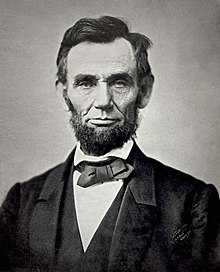 | ||||||
| Beloved president, sort of a dictator. |
The executive power grab on matters of national security really came to the fore during the Cold War. Remember, the last time Congress officially declared war was in 1941. Every military intervention since that point has been at the prerogative of the executive - Korea, Vietnam, that war's expansion into Laos and Cambodia, Desert Storm, etc. Congress, which of course has the power of the purse, has often been cowed into compliance with cries of "Why won't you support the troops??" and insinuations of unpatriotism. Perhaps the most egregious example was the Gulf of Tonkin Resolution in 1964, which broadly authorized the LBJ administration to use military force in Southeast Asia in response to two minor incidents with North Vietnam, one of which was later proven not to have occurred. Each success by a president to single-handedly dictate foreign policy has emboldened his successors of either party. Congress tried to get a rein on this trend in 1973 with the War Powers Resolution. Passed by an un-vetoable two-thirds majority, it declares that the president cannot commit military forces to action without Congressional approval, unless under an emergency. Every president since its passage has declared the resolution unconstitutional and ignored it.
Additionally, drones are really just the latest technology enabling a practice, targeted killing, that the U.S. has engaged in many times throughout its history - if perhaps a bit messier. Or, if short of killing, at least the deposition of people the executive didn't care for at the time. Examples: overthrow of the democratically-elected Iran government in 1953, attempted Bay of Pigs invasion to overthrow Castro, and the CIA's support for Pinochet's coup over an elected president and his subsequent military dictatorship in Chile. Targeted killings with drones are pretty easy to imagine as a logical progression of these policies in response to a different threat (terrorists replacing Communist-leading leaders).
That brings us to 2001 and the beginnings of the war on terror. That term itself is legally problematic - who is the war against? How do we fight such a war? What are the win conditions? When will we know it's over? Nevertheless, in the uber-patriotic, ass-kicking fervor that followed 9/11, Congress passed the Authorization to Use Military Force (AUMF) by votes of 420-1 (House) and 98-0 (Senate). The AUMF authorizes the president to “to use all necessary and appropriate force” against those nations, organizations and individuals responsible for the 9/11 attacks - not limited to Afghanistan. It is this joint resolution that forms the basis of the Obama administration's legal justification for drone strikes, adding that since a state of war exists between the U.S. and al Qaida, the Taliban, and "associated forces" (awfully broad), drones are perfectly in line with our inherent right to self-defense. Which really just raises more questions - can we be at war with a non-state entity? What are the conditions for such? And how closely is a remote strike tied to the right to respond to an imminent threat?
That's where we stand today. Hopefully I've made it clear that this is far from an "Obama-only" issue. Some conservatives are trying to portray it as such, claiming hypocrisy for Democrats refusing to question Obama's foreign policy. Well, if they paid attention to lefty thought circles they would know that many progressives have been very critical of drones. Some refused to support him in the last election because of it. I'm glad those high-minded idealists exist; they can be vital in drawing attention to important issues. However, more pragmatic progressives, myself included, decided that it was better to support the candidate you agree with most of the time and who has a chance at winning. After the election, you can (and rightfully should) hold his feet to the fire as much as you want. Some seem to have this idea that if you support Candidate X you must agree with everything he or she says and does. Not true. There is certainly room for intra-party discourse and disagreement, though that's something that the overly rigid modern GOP often seems to disallow. Moreover, if you think Romney would have ended the drone strike policy, hopefully the history I've outlined above shows you are most likely mistaken.
Congress, then, really needs to seize the initiative if it wants to limit executive power abuses on national security. Its recent track record on this is less than stellar. While it's become painfully clear that the Bush administration orchestrated the Iraq War through misinformation, outright lies, and the constant accusations of un-Americanism at potential opponents, Congress nonetheless authorized the use of force in Iraq through a vote that included prominent Democrats such as John Kerry and Hillary Clinton. They certainly could have done a better job questioning the shoddy evidence the Bush administration was presenting. Interestingly, some of the most probing and insightful questions about drones right now are coming from Senator Rand Paul (undoubtedly influenced by his dad Ron). However, on every other issue I think he is kind of insane. Like I said, it's complicated.
Drones, therefore, are not a partisan issue. It is a question of restoring the balance of power between an increasingly polarized and timid Congress and the corresponding rise of the Imperial Presidency. However, both parties are held back from publicly expressing concerns above the policies of their own president, out of fear of possible political consequences. Therefore, it may fall to the media and regular citizens to be the harbingers of change. The media certainly has its own set of problems - its complicity and often outright giddiness in the march towards the Iraq War was shameful. So that leaves us. If drones bother you, write your Congressman. Petition the White House. Organize an online group or protest. It's an issue that needs to be addressed, because the day may come when terrorists have their own drones to use against us. If that happens, it would be nice to say to the world that we have established a sound, restricted policy that enables us to take the moral high ground. To tweak the Golden Rule, "do unto others only as much as you would have done unto you."
P.S. I've been known to rail against the false equivalency of "both sides do it!," which is the reactionary cry from conservatives and centrists whenever the Right is caught in a screwup. Here, however, we have a case study that is demonstrably proven by history as it is mostly based, as I've shown, on a legislative vs. executive power conflict rather than one of pure ideology.

No comments:
Post a Comment